
Cabinet refacing vs. replacement: which is right for your kitchen?
On this page · 9 sections
Nearly every in-home estimate we do across the Denver metro starts at the same place: the homeowner is tired of the kitchen, and they want to know whether the cabinets have to come out or whether new doors, new fronts, and a new finish will get them there. It's a fair question, and the honest answer depends on the kitchen, not on which job is bigger.
The decision usually comes down to four things: whether the cabinet boxes are still sound, whether the layout still works for you, what's happening with your countertops, and whether your real complaint is the look or the storage. Work through those four and most kitchens land clearly on one side. Here's how we walk homeowners through it.
The short answer
Bottom Line Up Front
If your cabinet boxes are solid and dry and you like the layout, reface them. If the boxes are water-damaged or sagging, or the layout itself has to change, replace them as part of a remodel.
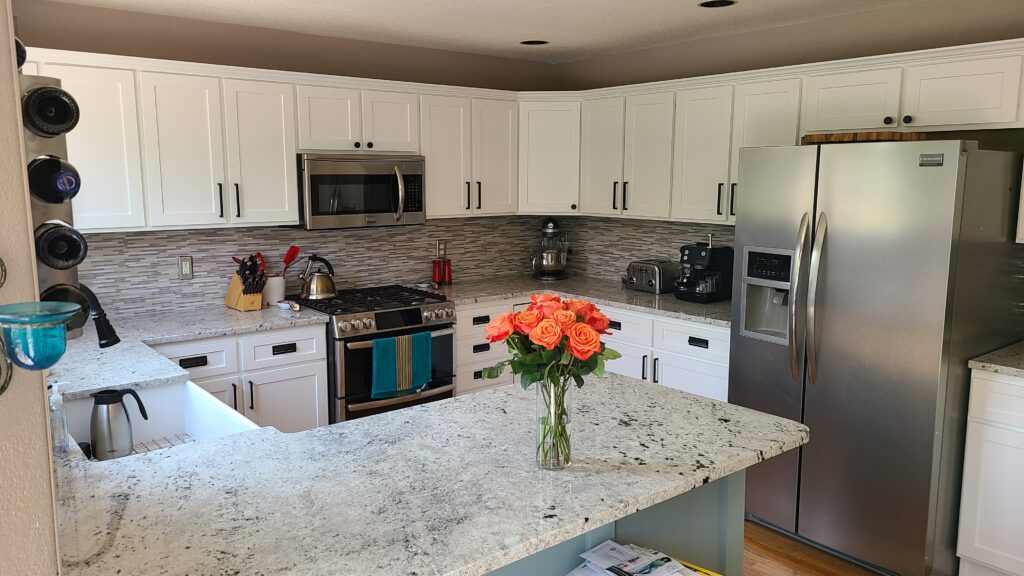
Refacing is the right call far more often than homeowners expect, especially when there's already granite on top that you want to keep. The cabinets you see every day are the doors, the drawer fronts, and the frames, and those are exactly what a reface replaces. The trick is checking the boxes behind them before you decide.
family-owned company
on our installation
from our door supplier
The rest of this post is the four questions behind that answer, what separates a reface that lasts from one that peels, and a decision matrix at the end you can work through standing in your own kitchen.
Question 1: Are the cabinet boxes still sound?
Refacing keeps the cabinet boxes you already have and gives them new doors, new drawer fronts, and a new skin over the frames. That's exactly why it works so well when the boxes are in good shape: you keep the part that's doing its job and replace the part you look at every day.
It also means the boxes have to be worth keeping. Open every door and look inside. Cabinets that are square, dry, and solid are good candidates for refacing. Boxes that are swollen from water, sagging under their own weight, or coming apart at the joints are a different conversation, because a beautiful new face on a failing box is still a failing cabinet.
The cabinet under the sink tells you more than any other one in the kitchen. Look for a swollen, crumbly floor panel, dark water stains, or a soft spot when you press down. A small, old stain from a leak that was fixed years ago is common and rarely a deal-breaker. Damage that has spread into the sides and the face frame is worth pointing out to us at the estimate, because it changes what the cabinet needs.
Reface vs. replace at a glance
This is the comparison we'd sketch on the counter during an estimate. Each row is a real decision factor, and the highlighted column is the smarter call when that factor is the one driving your decision.
| Factor | Lean Reface | Lean Replace |
|---|---|---|
| Cabinet boxes | Solid, dry, and square | Swollen, sagging, or coming apart |
| Layout | Works for how you cook | Walls, islands, or appliances need to move |
| Countertops | Granite you want to keep, or new granite going on | Coming out with the cabinets anyway |
| Storage | Fixable with roll-outs or modifications | Needs a different cabinet footprint |
| The look you want | New doors and a wood or laminate finish | Different cabinet sizes or configuration |
| Scope of work | Cabinet boxes stay in place | Full tear-out of the cabinets |
Your kitchen is likely more than one row. The right call is whichever column wins the most of your rows, and the estimate is where we confirm it.
Question 2: Does the layout still work for how you cook?
Refacing changes how your cabinets look, not where they are. If the sink, range, and refrigerator are where you want them, and you're not fighting the floor plan every time you cook, refacing gives you a new kitchen on the footprint you already like.
If the real problem is the shape of the room — you want a wall opened up, an island where there isn't one, or appliances moved to the other side — then the cabinets are going to move anyway, and that's a full kitchen remodel. Plenty of kitchens fall in between: the layout is fine except for one appliance that doesn't fit, or one cabinet that's in the way. That's usually a modification, not a reason to start over.
Question 3: What happens to your countertops?
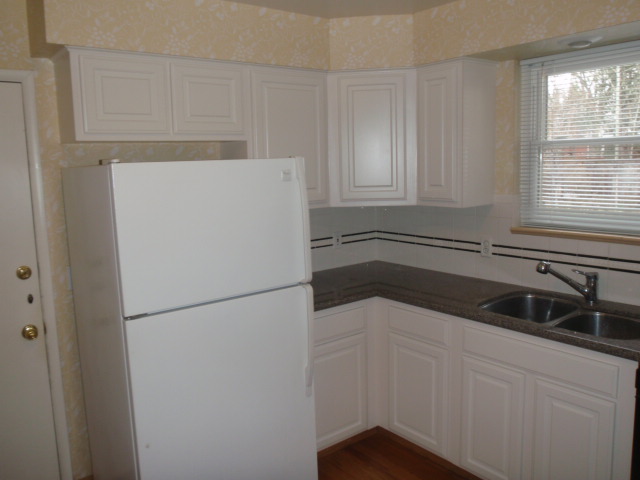
This is the question that catches homeowners off guard. A lot of people put in granite a few years ago, love it, and then find that refacing contractors won't touch the cabinets underneath once the stone is already on. They end up stuck with cabinets they don't like under countertops they do.
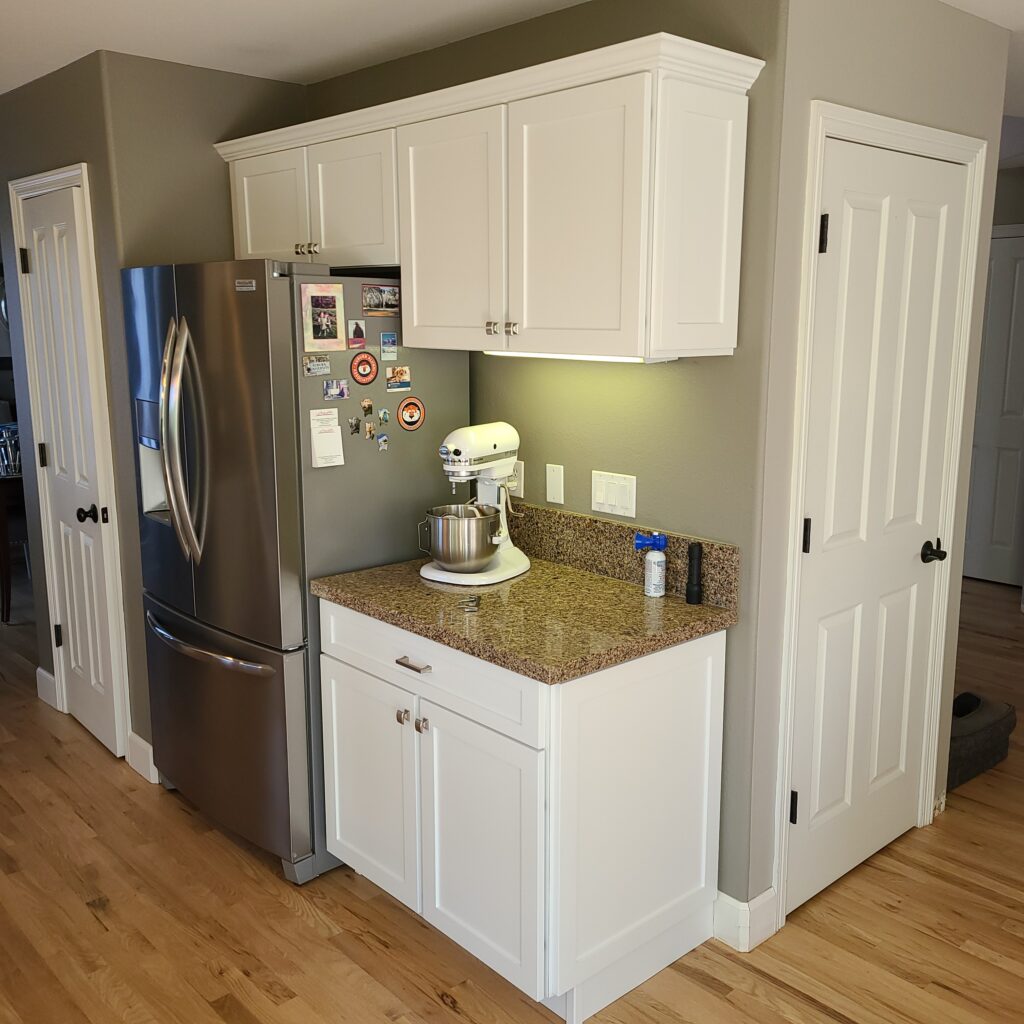
We reface cabinets under existing granite countertops all the time, and it isn't an issue. If your granite is in good shape, it can stay. If you're replacing the counters too, refacing and new granite together give you the biggest visual change without tearing out the cabinet boxes. Either way, keeping countertops you already paid for is one of the strongest arguments in favor of refacing.
Question 4: Is the real complaint the look or the storage?
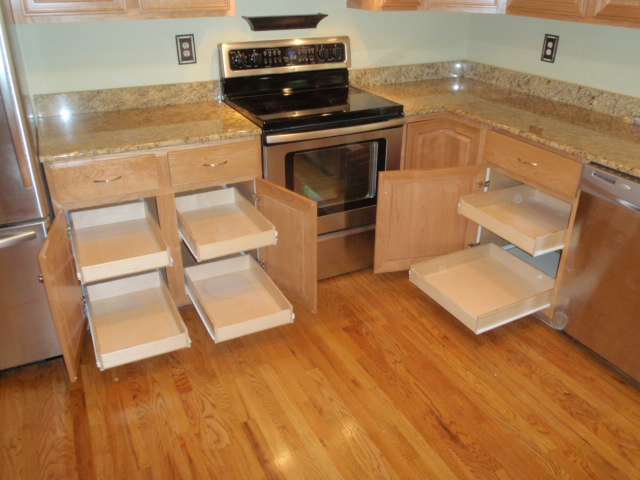
Some homeowners tell us they need new cabinets when what they really mean is that they can't reach anything. Pots disappear into the back of deep base cabinets, the corner cabinet is a black hole, and the new refrigerator doesn't fit the opening. None of those problems require replacing the cabinets.
Roll-out shelving turns deep base cabinets into storage you can actually use, and cabinet modifications handle the openings, panels, and cabinets that no longer fit how you use the kitchen. Paired with a reface, they solve both the look and the function in one project.
Signs it's a reface
The cabinets are sound and the layout works. Give them a new face and keep the rest.
What we look for
- The cabinet boxes are square, dry, and solid when you press on the shelves and floors.
- The sink, range, and refrigerator are already where you want them.
- You have granite countertops you want to keep, or you're planning new granite on the same footprint.
- Your complaint is the dated doors and finish, or storage that roll-outs and modifications can fix.
Signs it's a replacement
The boxes are failing or the room has to change shape. New faces won't fix that.
What changes the answer
- Water damage has spread through the floors, sides, and face frames of the cabinets.
- Shelves and cabinet bottoms sag, and joints are pulling apart.
- You want walls opened, an island added, or appliances moved to a new spot.
- The cabinets need to change size or configuration, not just appearance.
What separates a reface that lasts from one that peels
If refacing is the right call, the next question is how it's done, because not every reface is the same job. A lot of refacing contractors use a PSA material — pressure sensitive adhesive, essentially a peel-and-stick backing. It goes on fast. We don't use it. We glue everything on with a cold bonding cement, and every material we use is of the highest quality, so that we never have to come back.
You also have a choice of finish. On a solid wood reface, we fabricate all of our own wood and do all of our own finishing, so we handle the entire process from raw material to the last coat. On a laminate reface, we use a material called Deco Lam. The company we get our doors from backs them with a 5 year warranty, and our own workmanship is covered by our 1 year workmanship warranty.
Before you sign with any refacing contractor, ask one question: is it glued on, or is it a PSA material? Peel-and-stick backing is the quick way to finish a job, and it's the part of a reface most likely to give out in a kitchen full of heat, steam, and daily use. Make sure the contractor you hire is going to glue things on.
“Lots of people don't like doing cabinet refacing. We really enjoy it, and we do it the slow, glued-on way so we never have to come back.”— Affordable Kitchen & Bath Design
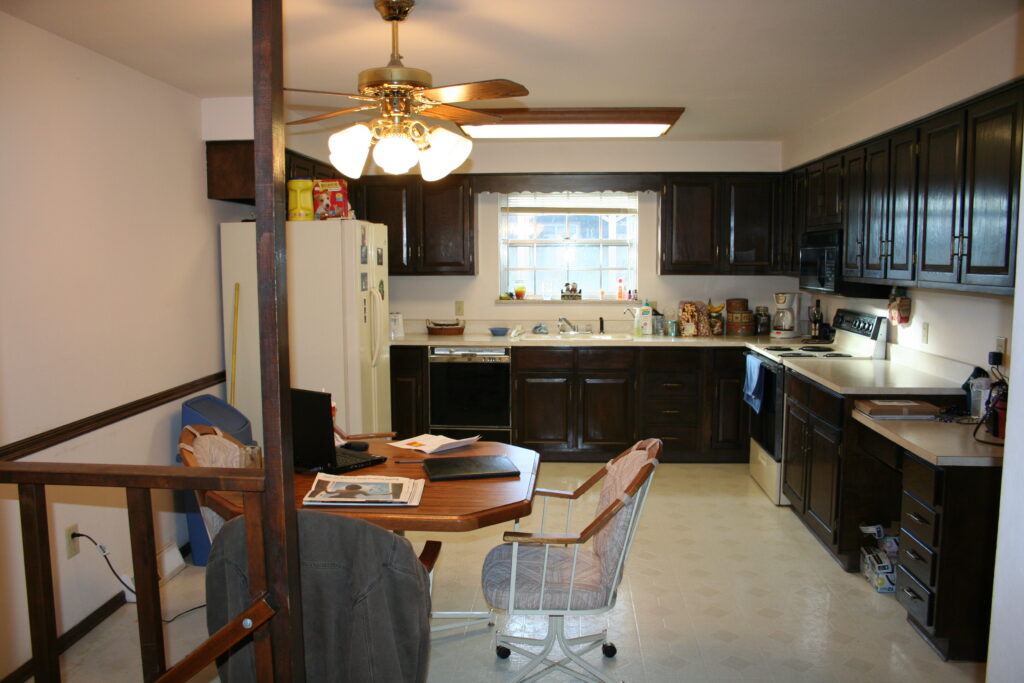
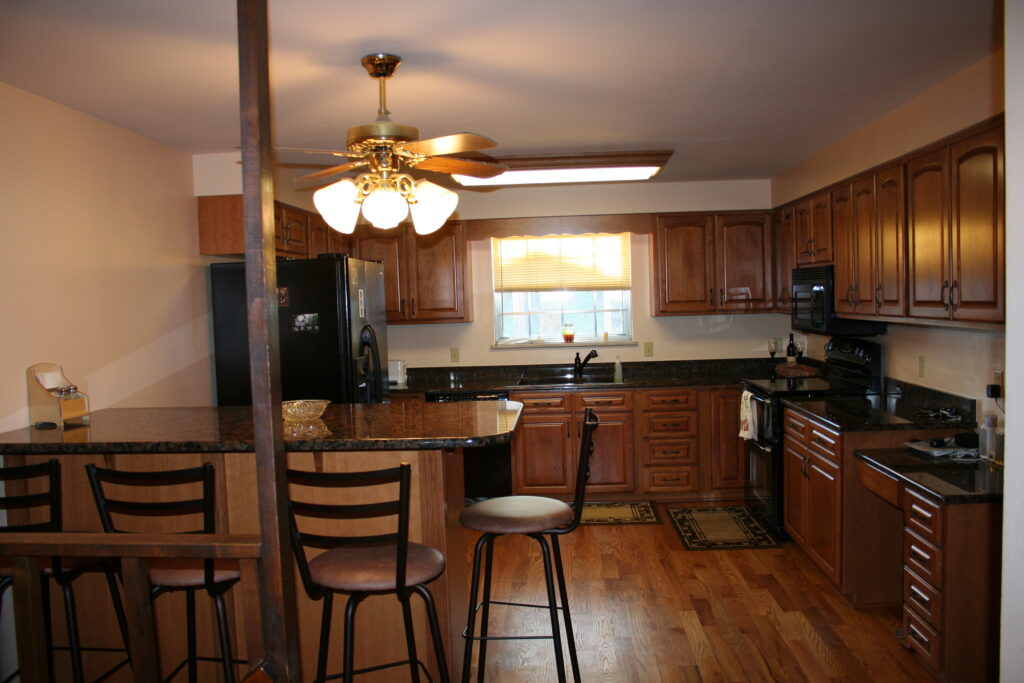
Same kitchen, two states. Drag the divider to compare where this kitchen started with how it looks finished.
The decision matrix
If you only do one thing with this post, do this table. Read down the left column, find the rows that describe your kitchen, and see which side has the stronger answer. Most kitchens match more than one row — the right pick is whichever column wins the most of your rows.
| If your kitchen… | Reface | Replace |
|---|---|---|
| Has solid, dry cabinet boxes | Yes | Unnecessary |
| Has a layout that already works | Yes | Overkill |
| Already has granite you like | Yes — it can stay | Puts the granite at risk |
| Has water damage under the sink | If it's contained | If it has spread |
| Needs walls or appliances moved | No | Yes |
| Is short on usable storage | Add roll-outs | Only if the footprint changes |
| Has boxes that sag or come apart | Not worth refacing | Yes |
The bottom line
Most kitchens that homeowners worry about don't need new cabinets. They need new faces on solid boxes, maybe better storage behind the doors, and countertops that either stay or get upgraded at the same time. Replacement earns its place when the boxes themselves are failing or the layout has to change, and in those kitchens it's usually part of a larger remodel.
If you're not sure which side your kitchen is on, that's what our free in-home estimate is for. We come out, look at the cabinets inside and out, and give you an honest answer, usually in an hour or two. You can see what a reface looks like in our project gallery, including a large cherry reface we did in Parker, and when you're ready, schedule your free estimate.